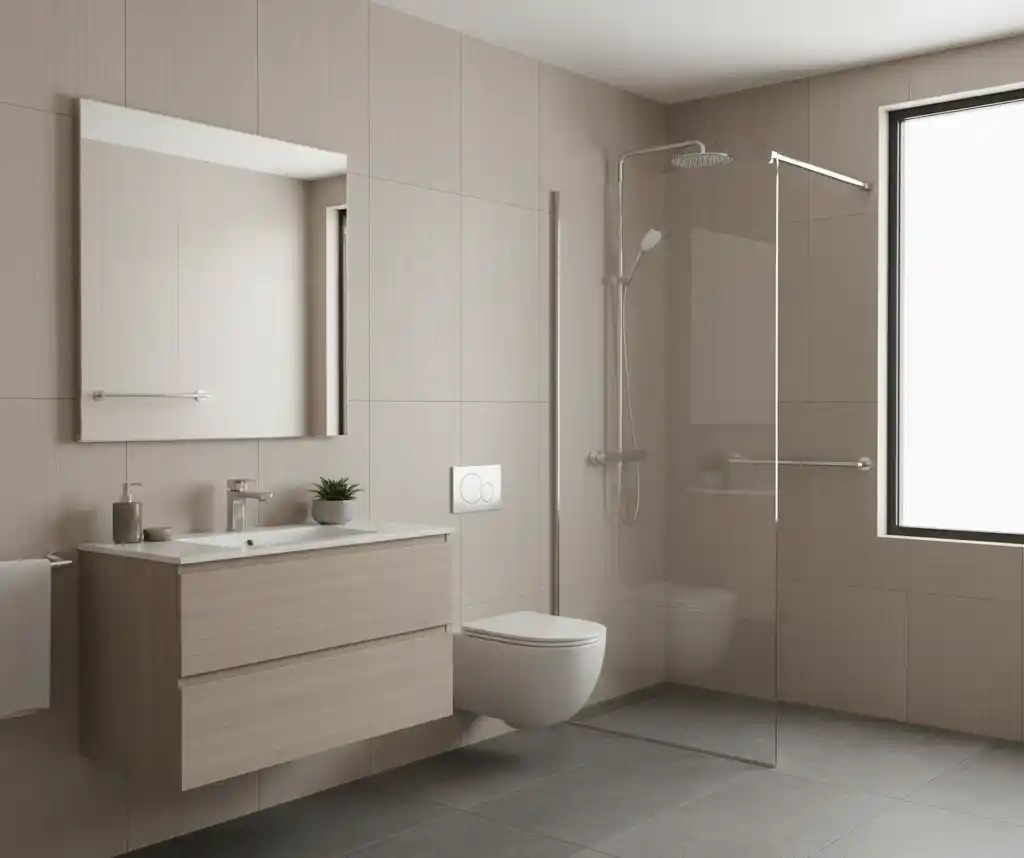
Best Bathroom Tiles for Rental Properties in the UK
When you manage or invest in rental properties, every design decision impacts maintenance costs, tenant satisfaction, and long-term property value. One of the most overlooked upgrades is the bathroom where the right tiles and furniture can transform durability, safety, and style.
Choosing the best bathroom tiles for rental properties in the UK isn’t just about appearance. It’s about selecting materials that resist moisture, reduce slips, and stay looking new after years of tenant use. Combined with low-maintenance vanity units, these choices help landlords minimise repairs and maximise returns.
Why Durable Bathroom Tiles Matter for Landlords
Bathrooms in rental homes take more daily wear than almost any other room. From heavy foot traffic to constant humidity, your tiles need to perform as well as they look.
Top landlord benefits include:
-
Longevity: Quality porcelain or ceramic tiles can last 10–20 years with minimal upkeep.
-
Easy maintenance: Smooth surfaces and fewer grout lines simplify cleaning between tenancies.
-
Tenant appeal: Modern, hygienic finishes help properties stand out in listings.
-
Safety compliance: Non-slip ratings protect you from potential liability issues.
According to a leading UK supplier of accessible bathroom furniture, these features make daily bathing both safer and more comfortable reducing the likelihood of accidents while adding long-term value to the property.
For homeowners and landlords alike, investing in an accessible vanity unit now can prevent future modifications and increase rental or resale appeal.
What “Non-Slip” Means in UK Bathrooms
Slip resistance is one of the most important considerations for bathroom flooring. The UK Health & Safety Executive (HSE) advises that any surface likely to get wet should still allow safe movement underfoot.
This doesn’t just apply to public spaces it’s equally relevant to domestic bathrooms, especially those designed for older adults or people with reduced mobility.
In practice, that means choosing tiles tested to recognised standards, rather than assuming all bathroom tiles are suitable for wet floors.
Key Standards and Safety Ratings for Bathroom Tiles
Before purchasing, it’s essential to understand a few key technical standards that define tile performance and safety.
- PEI rating (Porcelain Enamel Institute): wear resistance
A PEI 3 or higher rating is recommended for bathroom use, ensuring your tiles can handle daily wear without dulling or chipping.
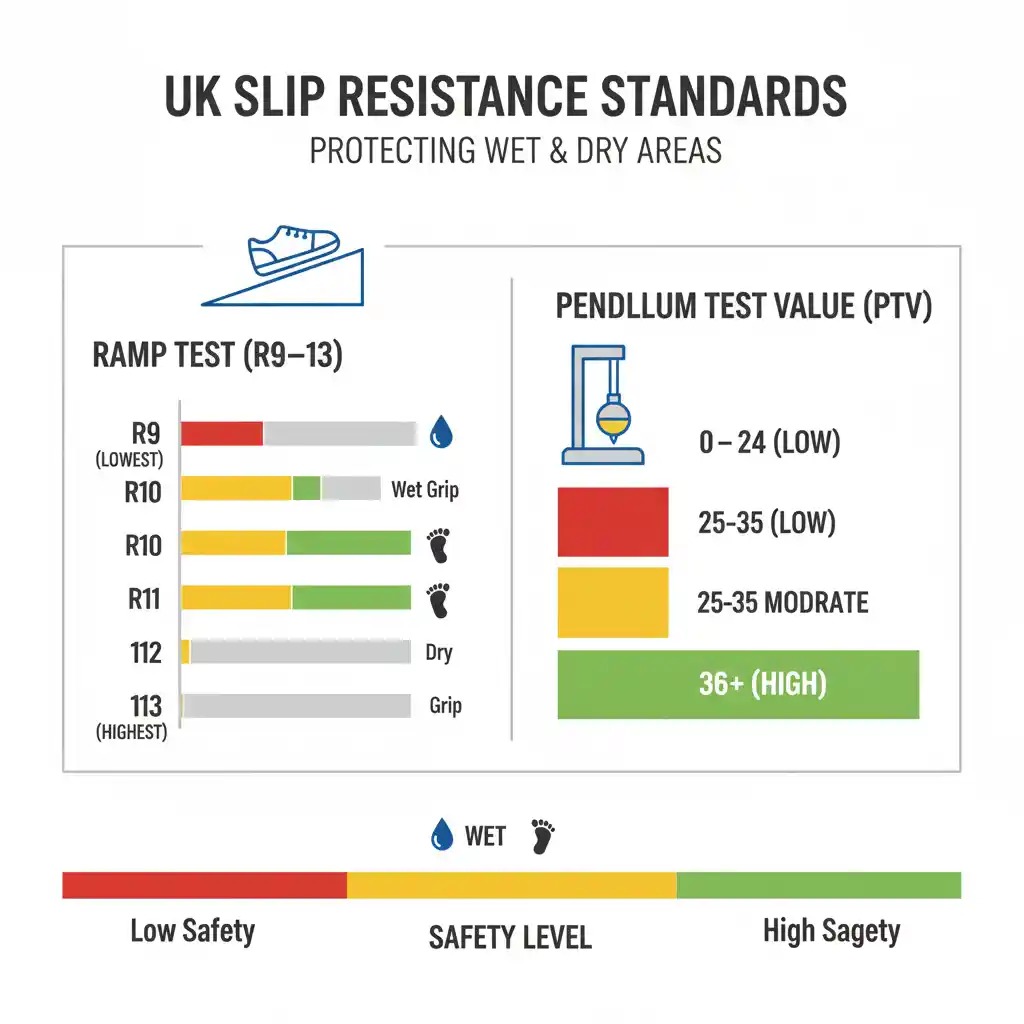
- Slip resistance: R-rating and PTV (Pendulum Test Value)
The R-rating uses a ramp test, common across Europe, but the UK prefers the PTV test, considered the gold standard for slip safety. A PTV score above 36 (wet) is recognised by the UK Slip Resistance Group and HSE as indicating a low risk of slipping.
- Water absorption: moisture and stain resistance
Porcelain tiles usually feature a water absorption rate below 0.5 percent, ensuring high resistance to staining and long-term durability.
- Neutral colours and standard sizes: easier replacement
Opt for timeless shades and standard-size tiles so replacements can be easily sourced if needed.
- Maintenance ease: fewer grout lines, smoother surfaces
Large-format tiles reduce grout joints, making cleaning simpler and helping maintain a fresh, modern look.
Every Royale Stones tile is supplied with a Specification Sheet showing its PEI rating, slip resistance (R-rating and PTV), and absorption data. Always review these with your installer before tiling it’s the simplest way to guarantee both beauty and compliance.
Example Pairing: Style That Meets Safety
When coordinated thoughtfully, tiles and vanity units can achieve both aesthetic harmony and safety.
For instance, Royale Stones’ Matte Grey porcelain tiles pair beautifully with their Light Wood wall-hung vanity range a combination that offers contemporary appeal while being highly practical for tenants or homeowners.
The Royale Stones Wall-Hung Unit X stands at approximately 800 mm, providing a 700 mm under-clearance, aligning with standard wheelchair accessibility guidelines.
This pairing ensures long-term comfort, ease of cleaning, and compliance with accessibility best practice all without compromising on design.
Safe and Professional Bathroom Installation Tips for Rental Properties
A successful installation goes beyond looks. Focus on these essentials:
- Allow at least 750 mm turning radius for wheelchair-friendly spaces.
- Choose curbless (no-threshold) showers wherever possible, and ensure adjoining tiles are R11 PTV 36+ or equivalent.
- Seal edges and joints properly to prevent water ingress under units and tiles.
- Check substrate flatness before fixing tiles uneven floors increase trip risks and stress on grout.
- Follow British Standards (BS 5385-1 and -5) for correct installation and bonding.
- Always use a qualified fitter experienced in accessible or safety-critical bathrooms.
For more detailed installation advice and measurements, check our Bathroom Vanity Unit Installation UK Guide.
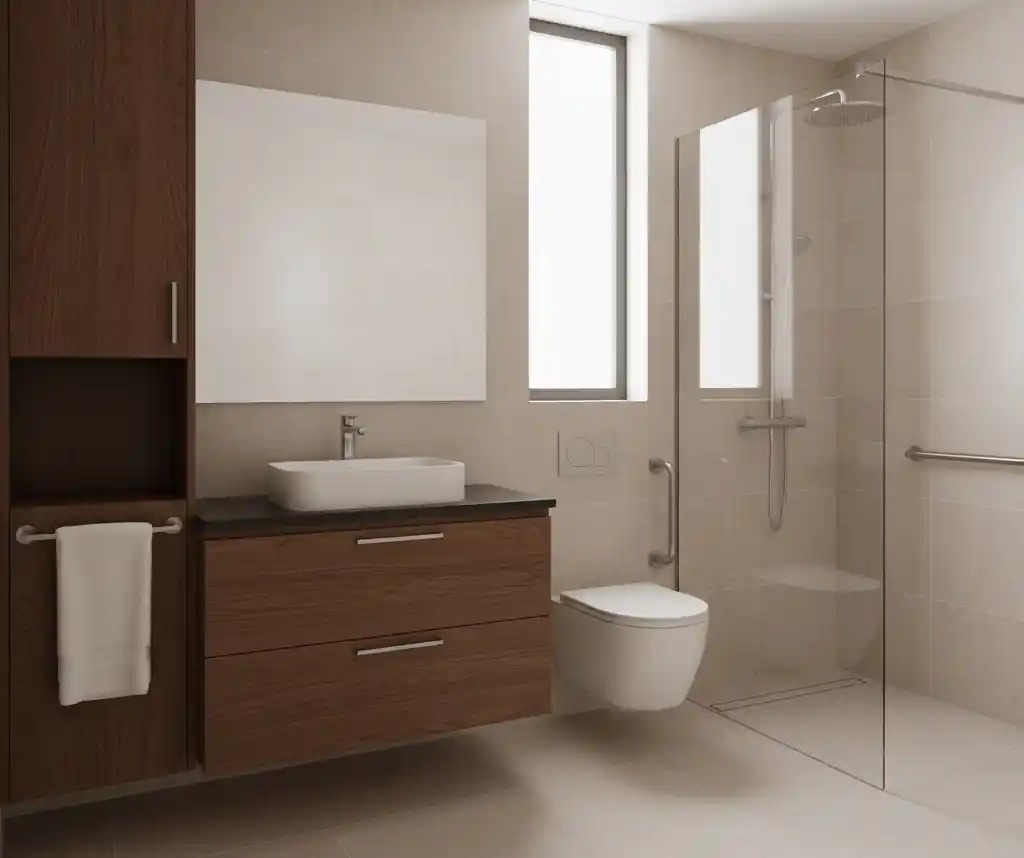
Best Tile Choices for Rental Bathrooms
1. Porcelain Tiles: Long-Term Value
Porcelain tiles are dense, water-resistant, and ideal for high-use spaces. They resist staining and scratches, making them perfect for long-term tenancies.
2. Ceramic Tiles: Affordable and Reliable
Ceramic is cost-effective, lightweight, and easy to replace if needed — a practical option for landlords managing multiple units.
3. Textured or Matte Finishes: Enhanced Safety
Matte finishes and subtle textures improve grip underfoot while maintaining a modern aesthetic.
4. Large-Format Tiles: Easier Cleaning
Fewer grout lines mean less dirt build-up and easier end-of-tenancy cleaning.
Pro Tip: Pair large-format tiles with light-coloured grout for a fresh, open feel that tenants love.
Maintenance and Longevity
Tiles that are correctly installed and maintained can last 10 to 20 years or more in a rental property.
According to Belvoir, most rental bathrooms typically need a refresh every 10 years, depending on tenant use and upkeep. Choosing porcelain non-slip tiles and moisture-resistant furniture reduces the frequency of refurbishments saving landlords time and long-term costs.
For a step-by-step planning guide covering tiles, vanity units, and fixtures, explore our detailed Bathroom Renovation Checklist for UK Homes.
Cost and Value: The Landlord’s View
Non-slip and durable bathroom tiles may cost around 20–50% more upfront, but they save significantly over time by reducing:
-
Repair frequency
-
Tenant complaints
-
Refurbishment costs between lets
A single slip-related claim can cost far more than upgrading to certified non-slip tiles making this a smart investment for any landlord.
Do Non-Slip Tiles Cost Significantly More?
Yes, non-slip or safety-rated tiles can cost around 20–50 percent more than standard ones due to their special surface texturing and official PTV slip testing.
However, as the HSE points out, even a single slip-and-fall claim can cost a landlord far more than this premium.
In other words, investing in high-quality non-slip tiles is not just a safety upgrade it’s a long-term cost-saving decision.
Conclusion
The best bathroom tiles for rental properties in the UK strike a balance between durability, design, and tenant safety. Non-slip porcelain or ceramic tiles paired with low-maintenance vanity units create a space that looks modern, reduces maintenance, and adds long-term property value.
If your goal is long-term durability with minimal maintenance, explore Royale Stones’ landlord-approved range of bathroom tiles and furniture designed to meet these exact criteria.
Frequently Asked Questions
Can I use glossy tiles in rental bathrooms?
Gloss tiles look sleek but can be slippery. Choose matte or textured finishes for safety.
How long should quality bathroom tiles last?
Typically 10–20 years, depending on material, maintenance, and installation.
Do tenants damage wall-hung vanity units easily?
Not if installed correctly on a reinforced wall. Always ensure professional fitting.
Are porcelain tiles worth the extra cost?
Yes, their durability and low maintenance reduce long-term expenses and downtime between lets.
Post a comment