How Do You Clean and Maintain Limestone Tiles?
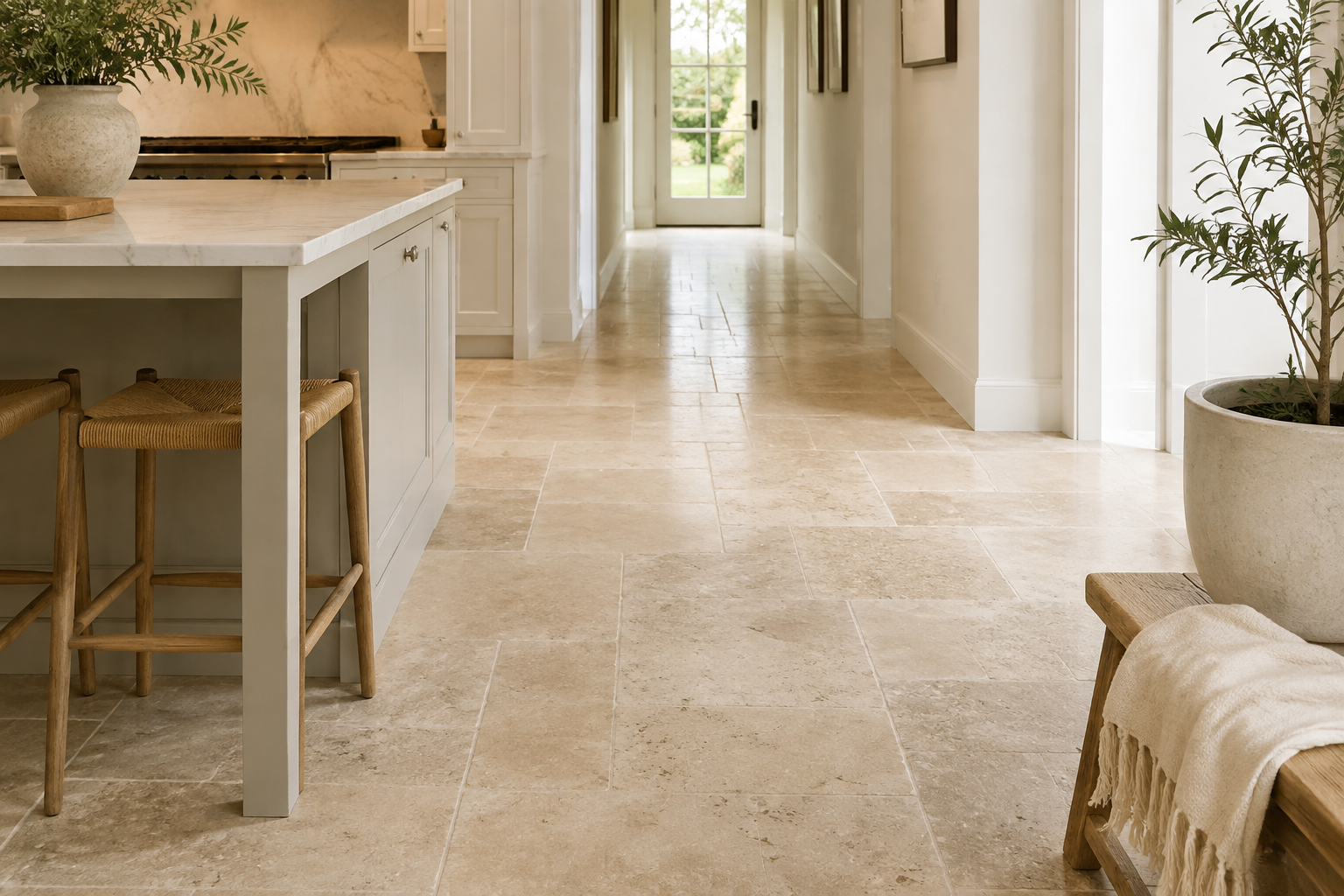
Dijon limestone tiles bring a timeless, soft beauty to floors and walls that ceramic or porcelain simply cannot match. Many homeowners, however, worry that this natural stone is high-maintenance or easily damaged. In reality, limestone is calcium-carbonate based and therefore acid-sensitive, which means the choice of cleaner matters far more than the effort required. With a straightforward routine — regularly removing grit, using a pH-neutral stone cleaner, dealing with spills promptly, avoiding acidic or abrasive products, and maintaining the protective treatment — limestone remains practical and long-lasting.
Absorption rates vary widely; the Natural Stone Institute notes that limestone can absorb anywhere from less than 1% to more than 10% water depending on the variety and finish. This variation means maintenance needs differ slightly from one stone to another, but the core principles stay the same. Follow the guidance below and limestone becomes a low-stress, high-reward surface rather than a difficult material.
Why Does Limestone Need Special Care?
Limestone is a natural, porous sedimentary stone formed largely from calcium carbonate. Its open structure allows liquids to penetrate if the surface is not protected, while its chemical composition makes it vulnerable to acidic substances.
Two distinct problems can occur. Staining happens when a liquid soaks into the pores and leaves a mark. Etching occurs when acid reacts chemically with the calcium carbonate, dulling or roughening the surface. Sealing improves resistance to staining but cannot stop acid etching. The Natural Stone Institute therefore recommends mild, non-acidic cleaners for all calcareous stones. Specialist manufacturers such as Indigenous and ECOPROTEC begin their advice with the same point: acid sensitivity is the single most important factor when choosing products for limestone.
How Do You Clean Limestone Tiles?
Routine cleaning keeps limestone looking its best and prevents the build-up that later requires more aggressive treatment.
1. Remove Dust, Sand and Loose Dirt
Sweep or vacuum thoroughly before any wet cleaning. Use a soft-bristle attachment so grit is lifted rather than ground into the surface. Entrances and high-traffic zones collect the most abrasive particles; the Natural Stone Institute highlights that sand, dirt and grit act as sandpaper underfoot and can gradually wear the stone or its sealer.
2. Use a pH-Neutral Limestone Cleaner
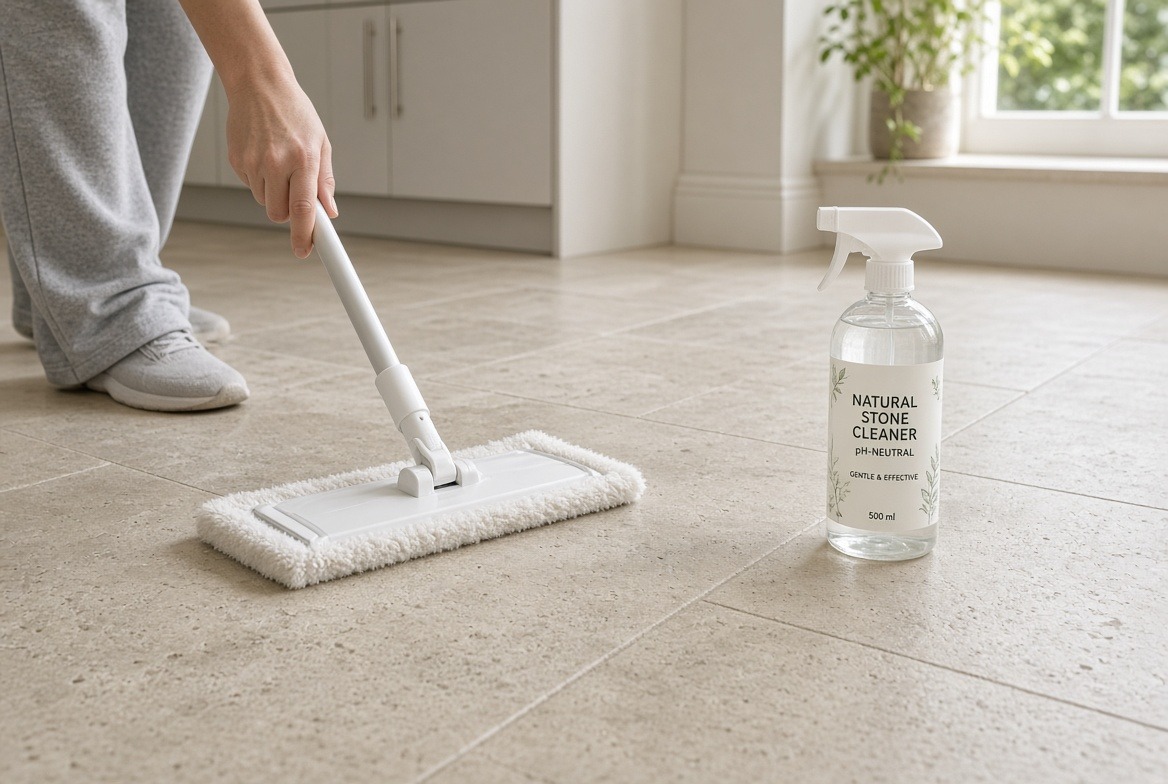
Select a cleaner formulated specifically for natural stone and dilute it exactly according to the manufacturer’s instructions. Warm water is usually preferred. Apply with a soft mop or microfibre cloth and avoid flooding the floor — excess water can seep into joints and porous areas.
3. Rinse and Dry Properly
Rinse with clean water, changing the rinse water regularly so residue is not redistributed. Where practical, dry the surface with a soft cloth or allow good ventilation. This reduces streaking and prevents a dull film from building up over time.
4. Adjust Cleaning Frequency to the Room
There is no universal schedule. Lightly used rooms can be cleaned as needed. Kitchens, hallways and other high-traffic areas benefit from more frequent attention. Many specialists suggest weekly routine cleaning as a practical baseline for busy households, while still recognising that actual frequency should match use.
What Should You Not Use to Clean Limestone Tiles?
Avoid Vinegar and Lemon
Both are acidic and will etch limestone. The popular household “natural cleaning” tip is therefore unsuitable for this stone.
Avoid Harsh Household Cleaners
Generic bathroom cleaners, limescale removers, strong bleach-based products and acidic tile cleaners can all cause permanent surface damage.
Avoid Abrasive Cleaning
Scouring powders, harsh brushes and abrasive pads scratch the surface and accelerate wear.
Be Careful with Steam Cleaning
Intense heat and moisture can compromise some sealers and, in certain conditions, contribute to spalling or flaking. Indigenous and ECOPROTEC both advise caution. Note also that some eco-labelled cleaners still contain acids; “eco” does not automatically mean stone-safe.
How Do You Deep Clean Limestone Tiles?
Deep cleaning is needed when ordinary maintenance no longer removes ground-in dirt, grease, traffic marks, dirty grout or outdoor algae and lichen.
- Vacuum or sweep thoroughly.
- Apply a limestone-compatible intensive cleaner at the dilution recommended for deep cleaning.
- Allow the product to dwell for the time stated by the manufacturer (often 5–10 minutes for many stone detergents).
- Agitate gently with a non-abrasive pad or soft brush.
- Remove the dirty solution.
- Rinse thoroughly to eliminate residue.
- Allow the surface to dry completely.
ECOPROTEC and Indigenous both stress thorough rinsing and the importance of following product-specific dilution and dwell times rather than improvising.
How Do You Remove Stains from Limestone Tiles?
Oil and Grease
Porous limestone readily absorbs oils. Repeated scrubbing is rarely effective; a specialist stone poultice or treatment is usually more successful.
Coffee, Wine and Food
Blot immediately with a clean cloth — never rub, as this forces the liquid deeper. Follow with a pH-neutral stone cleaner.
Rust and Metal Marks
Avoid ordinary acidic rust removers. Deep-seated rust is notoriously difficult to remove and may need professional treatment.
Do Limestone Tiles Need to Be Sealed?
In most cases, yes — a penetrating (impregnating) sealer is beneficial. It soaks into the pores and increases resistance to water and oil-based stains without creating a surface film. Sealing does not make limestone completely stain-proof and offers no protection against acid etching. Different finishes (polished, honed, tumbled, textured) and different absorption rates call for appropriate products. Always follow the guidance of both the stone supplier and the sealer manufacturer. The Natural Stone Institute is clear: sealing improves stain resistance; it does not render stone immune.
How to Seal Dijon Limestone Tiles and How Often Should You Reseal Them?
Dijon Limestone should be cleaned thoroughly and allowed to dry completely before any sealer is applied. A high-quality penetrating limestone sealer reduces water and stain absorption while leaving the natural appearance intact.
Resealing intervals depend on traffic levels, moisture exposure, cleaning habits and the specific product used. A simple water-drop test can give an indication of whether protection is still effective, but it is not a substitute for the sealer manufacturer’s instructions. One Dijon Limestone specialist recommends resealing many indoor areas such as kitchens, hallways and ground floors approximately every 4–5 years, with bathrooms and high-moisture zones often needing more frequent attention. For a detailed step-by-step process, see our dedicated guide: How to Seal Dijon Limestone Tiles and How Often Should You Reseal Them?
How Do You Maintain Limestone Tiles Long Term?
- Sweep or vacuum regularly to remove abrasive grit.
- Clean spills the moment they occur.
- Use only pH-neutral stone cleaners.
- Never resort to vinegar, lemon or other acidic “hacks”.
- Place entrance mats to reduce the amount of dirt tracked indoors.
- Keep wet areas as dry as practical.
- Monitor the performance of the sealer.
- Deep clean when routine methods no longer suffice.
- Have significantly etched or damaged surfaces assessed by a professional.
Consistent habits like these protect both the appearance and the value of quality limestone tiles. Most people select Royale Stones to buy dijon limestone due to its durable, properly finished and premium tiles. You can also find them on disqus.
How Should You Clean Limestone in Kitchens and Bathrooms?
Kitchen
Address oil, food and drink spills promptly with a compatible stone cleaner. Pay extra attention to the high-traffic zones around sinks, cookers and worktops.
Bathroom
Avoid acidic limescale removers. Wipe away soap residue and standing water, and dry surfaces where practical to limit mineral build-up. Choose products safe for both the limestone and its sealer.
When the stone is correctly selected, installed and maintained, limestone performs well in kitchens, bathrooms and hallways alike.
When Should You Call a Professional?
Seek specialist help if the limestone has been etched by acid, if deep stains remain after appropriate cleaning, if the surface has become severely dull, if grout is heavily contaminated, if the sealer has failed, or if honing or restoration is required. Acid damage is permanent at the material level, although skilled refinishing can often restore the appearance.
Limestone Tile Cleaning: Quick Maintenance Checklist
- Sweep/vacuum regularly to remove abrasive grit
- Clean with a pH-neutral stone cleaner
- Blot spills immediately
- Avoid vinegar, lemon, acidic cleaners and harsh abrasives
- Deep clean when dirt becomes embedded
- Seal where appropriate for the stone and application
- Reseal according to product guidance and signs of reduced protection
- Test unfamiliar products on an inconspicuous area first
- Call a professional for serious staining, etching or restoration
FAQs About Cleaning and Maintaining Limestone Tiles
Can you use vinegar to clean limestone tiles?
No. Vinegar is acidic and will etch the surface of limestone.
What is the best cleaner for limestone tiles?
A pH-neutral cleaner specifically formulated for natural stone.
How often should limestone tiles be cleaned?
Frequency depends on traffic and location. Heavily used kitchens and hallways usually need more frequent cleaning than lightly used rooms.
Do limestone tiles need to be sealed?
Sealing generally improves stain resistance, but the exact requirement depends on the particular limestone and its application. Follow manufacturer guidance.
How often should Dijon Limestone be resealed?
Many indoor applications are recommended for resealing every 4–5 years, though bathrooms and high-moisture areas may need more frequent attention. See our dedicated sealing guide for full details.
Can you steam clean limestone tiles?
Generally avoid steam cleaning unless the stone and sealer manufacturer specifically confirm it is suitable.
Post a comment